

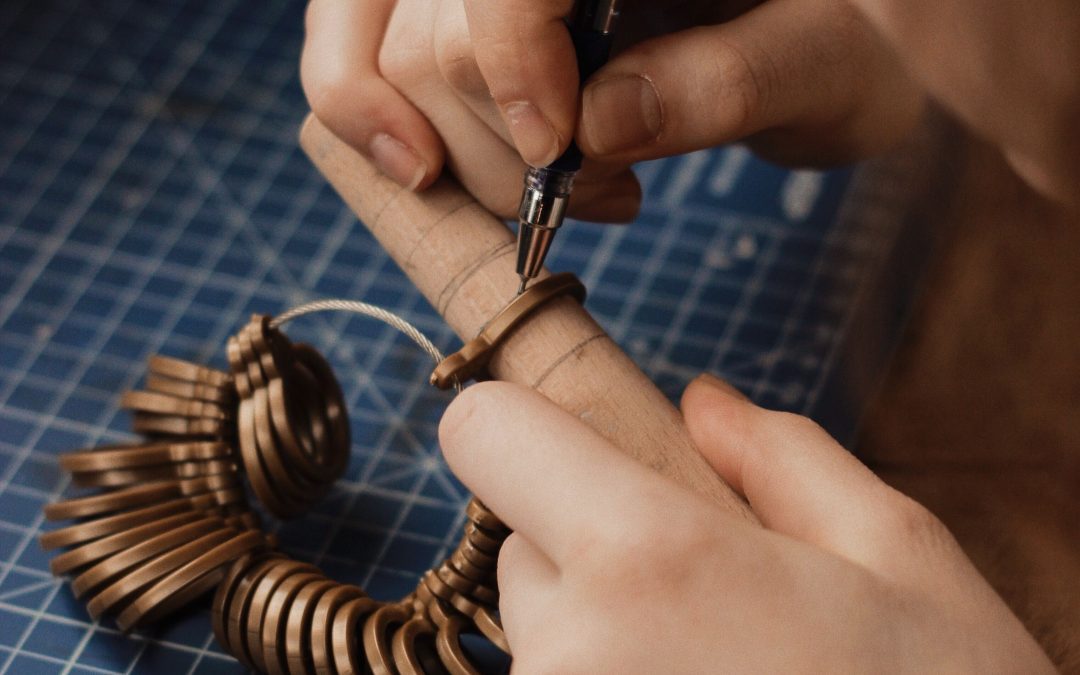
There are several ways to resize your wedding ring, and the right method depends on the ring’s metal, design, width, stones, engraving, and how much the size needs to change. A jeweler may stretch the ring slightly, add metal to make it larger, remove metal to make it smaller, adjust the shank, or recommend sizing beads, a ring guard, or a custom remake if the ring cannot be safely resized.
The most important thing to know is this: wedding ring resizing should protect both the fit and the structure of the ring. At Beard Fine Jewelers in Lufkin, we often see clients who just want the ring to feel comfortable again. That may sound simple, but a proper resize takes careful evaluation, especially if your wedding band has diamonds, engraving, texture, or sentimental details.
Why Wedding Rings Need Resizing
Your wedding ring is meant to be worn through ordinary days, busy seasons, celebrations, and life changes. It is completely normal for the fit to change over time.
Fingers can change size because of:
- Weight changes
- Pregnancy
- Aging
- Arthritis or joint changes
- Weather and temperature
- Fluid retention
- Medication changes
- Daily activity
- Knuckle size
- Years of regular wear
In East Texas, heat and humidity can also affect how your ring feels. A ring that fits comfortably in cooler weather may feel tighter during a hot Lufkin summer afternoon. That does not always mean the ring needs to be permanently resized, but it does mean the fit should be evaluated thoughtfully.
A good resize is not just about making the ring bigger or smaller. It is about making sure it fits your hand in real life.
How A Jeweler Checks The Fit First
Before resizing, a jeweler should look at both your finger and your ring.
The ring needs to slide over the knuckle with some resistance, then sit comfortably at the base of the finger. It should not spin constantly, pinch, or feel like it could fall off.
During a fitting, we usually look at:
- How the ring moves over your knuckle
- How it feels once it is in place
- Whether your finger changes size throughout the day
- Whether the ring spins
- Whether swelling is temporary or consistent
- How wide the band is
- Whether you stack it with other rings
- Whether stones or details affect resizing options
Wider bands often fit tighter than narrow bands, even in the same size. If you wear your wedding band with an engagement ring, the full stack may feel snugger than one ring alone.
Expert Tip
Do not resize your ring based on one uncomfortable day. If your finger is swollen from heat, travel, salty food, or exercise, wait and check the fit again when your hand feels normal.
Making A Wedding Ring Larger
There are two main ways to make a wedding ring larger: stretching it slightly or adding metal.
The right method depends on how much larger the ring needs to be and how the ring is made.
1. Stretching The Ring
For a small size increase, a plain band may sometimes be stretched.
This works best for simple bands without diamonds, intricate patterns, engraving, or delicate details. Stretching can slightly thin the metal, so it is not always the best option.
Stretching is usually considered only when:
- The size change is minor
- The band is plain
- The metal is strong enough
- There are no stones
- The design will not distort
If your ring has diamonds or detailed work, stretching may damage the setting or alter the design.
2. Adding Metal To The Band
For a more precise or larger size increase, a jeweler can cut the ring at the bottom and add a small piece of matching metal.
This is often the better method for gold or platinum wedding bands because it allows the jeweler to control the size more carefully.
After the metal is added, the ring is shaped, soldered or welded, refinished, and polished so the adjustment blends with the original design.
This method is often used for:
- Gold wedding bands
- Platinum wedding bands
- Rings that need a larger adjustment
- Bands with sentimental value
- Rings that need structural support
- Custom wedding bands
A properly done resize should feel smooth and comfortable, with the added section blended carefully into the shank.
Making A Wedding Ring Smaller
To make a wedding ring smaller, the jeweler usually removes a small section of metal from the bottom of the band.
The ring is then brought back together, joined, shaped, and refinished.
This method is common, but it still requires skill. If the ring has diamonds, patterns, engraving, or a special finish, the jeweler needs to make sure the design stays balanced.
Making a ring smaller may be straightforward if the band is plain. It can be more complex if the ring has:
- Diamonds around the band
- A detailed gallery
- Milgrain
- Engraving
- A hammered finish
- Mixed metals
- A curved or contoured shape
- A very thin shank
If a ring is resized too much in one direction, it can affect the shape and stone alignment.
From The Jeweler’s Bench
The bottom of the ring, called the shank, does more work than people realize. When resizing, the shank needs to be strong, smooth, and shaped correctly so the whole ring wears comfortably.
Wedding Ring Resizing Options
Here is a simple guide to the most common resizing methods.
| Resizing Method | Best For | What To Consider |
| Stretching | Minor size increase on plain bands | Can thin or distort metal if overused |
| Adding Metal | Larger or more precise size increase | Best handled by an experienced jeweler |
| Removing Metal | Making a ring smaller | Design details must be protected |
| Sizing Beads | Rings that spin but fit over the knuckle | Adds small interior beads for stability |
| Ring Guard | Temporary fit adjustments | Helpful short-term, not always ideal long-term |
| New Shank | Worn or weakened rings | Restores strength to the bottom of the ring |
| Custom Remake | Rings that cannot be resized safely | Preserves the design in a better-fitting version |
The best option depends on the ring, not just the number on the ring sizer.
What If Your Ring Spins But Feels Tight Over The Knuckle?
This is one of the most common fit problems.
Your ring may need to be large enough to pass over the knuckle, but once it reaches the base of the finger, it spins.
In that case, making the whole ring smaller may not work. It could make the ring impossible to remove.
Sizing beads may be a better solution.
Sizing beads are small metal beads added to the inside of the ring. They help the ring sit more securely without reducing the entire interior size.
They can be especially helpful if:
- Your knuckle is larger than the base of your finger
- Your ring spins constantly
- Your ring top-heaviness pulls it to the side
- You want a less permanent adjustment than a full resize
Sizing beads take a little getting used to, but many clients find they make daily wear much more comfortable.
Can Rings With Diamonds Be Resized?
Yes, many diamond wedding rings can be resized, but they need extra care.
The jeweler must consider where the diamonds are placed and how resizing will affect the settings.
A ring with diamonds only across the top is often easier to resize than a full eternity band with diamonds all the way around.
If diamonds go completely around the ring, resizing can be difficult or sometimes not recommended. Changing the size may disturb the stone spacing, weaken settings, or require removing and resetting stones.
For diamond wedding bands, a jeweler will check:
- Stone placement
- Prongs or channels
- Metal thickness
- Previous repairs
- Whether stones are loose
- Whether the ring can keep its shape after resizing
If your ring has diamonds, do not have it resized without a full inspection first.
What If Your Ring Cannot Be Resized?
Some rings cannot be resized safely.
This may happen when the ring has diamonds all the way around, a delicate pattern, very thin metal, heavy wear, or a design that would be damaged by cutting and reshaping.
In those cases, your jeweler may recommend another solution.
Options may include:
- Adding sizing beads
- Using a temporary ring guard
- Rebuilding the shank
- Creating a new ring in the correct size
- Redesigning the original ring
- Making a matching band that fits better
This is where honest guidance matters. If resizing will damage the ring, it is better to know that before any work begins.
At Beard Fine Jewelers, we would rather help you choose the right long-term solution than force a repair that may compromise the ring.
How To Know If Your Ring Is Too Tight Or Too Loose
A ring that fits well should feel secure, but not uncomfortable.
Your ring may be too tight if:
- It leaves a deep mark
- It causes pain or tingling
- It is difficult to remove
- Your finger swells around it
You avoid wearing it because it feels uncomfortable
Your ring may be too loose if:
- It spins constantly
- It slides off too easily
- It feels unstable when your hands are cold
The top of the ring keeps turning to the side
You worry about losing it
If you are unsure, have your finger measured at different times of day. Morning, afternoon, and evening can give slightly different results.
Care Tip
If your ring suddenly becomes painfully tight, do not keep forcing it. Remove it if you safely can. If you cannot remove it and your finger is swelling, seek immediate help.
How To Care For Your Ring After Resizing
After resizing, give your ring a little attention.
A newly resized ring should feel smooth, secure, and comfortable. If you notice roughness, tightness, spinning, or a change in how stones look, bring it back for evaluation.
After resizing, it is wise to:
- Check the fit over several days
- Avoid heavy wear right away if advised
- Clean the ring gently
- Watch for loose stones
- Store it safely when not wearing it
- Schedule regular inspections
If your ring has a special finish, such as matte, brushed, hammered, or sandblasted, ask how the resized area will be matched to the original texture.
A well-done resize should respect the whole design, not just the ring size.
The Beard Fine Jewelers Perspective
Wedding ring resizing is personal because the ring itself is personal.
This is not just metal being adjusted. It is the ring you exchanged, the ring you wear through daily life, and often the ring tied to some of your most meaningful memories.
With over 40 years in fine jewelry, Beard Fine Jewelers has helped generations of clients in Lufkin and East Texas care for wedding rings, engagement rings, custom designs, appraisals, and family pieces. Some rings need a simple adjustment. Others need careful restoration. Some need a new design that protects the original story.
Our job is to help you understand your options clearly, so your ring can be worn comfortably and confidently again.
That is where experience, craftsmanship, and patience matter.
Make Your Wedding Ring Fit Your Life Again
The different ways to resize your wedding ring include stretching, adding metal, removing metal, sizing beads, ring guards, new shanks, and custom remakes. The best choice depends on your ring’s design, condition, metal, stones, and how much the size needs to change.
If your wedding ring feels too tight, too loose, or uncomfortable, do not guess at the solution. Have it inspected by an experienced jeweler who can explain what is safe for your specific ring.
If you need wedding ring resizing in Lufkin, TX, or want guidance on ring repair, custom wedding bands, appraisals, or expert consultations, visit Beard Fine Jewelers at 2002 S 1st St, Lufkin, TX 75901, call (936) 637-2848, or explore more at www.beardfinejewelers.com.
We would be honored to help your ring feel comfortable, secure, and ready for the years ahead.