


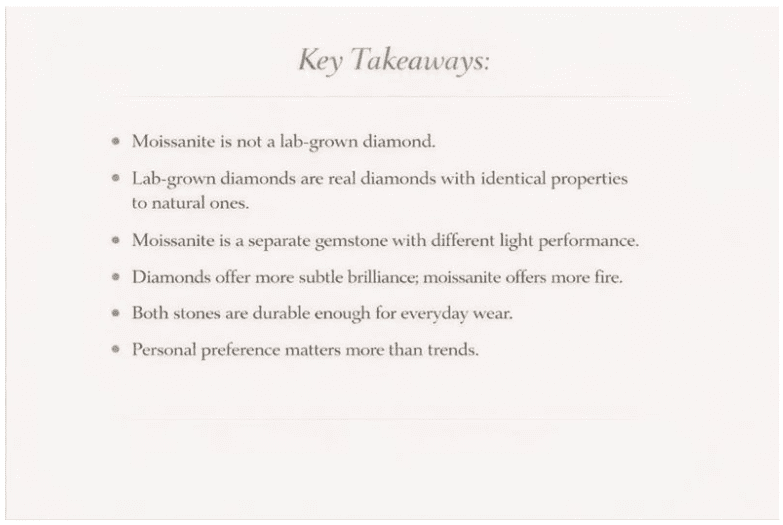
No—moissanite is not a lab-grown diamond. While both are created in laboratories and may look similar at first glance, they are entirely different materials with distinct optical properties, structures, and value profiles. A lab-grown diamond is chemically and physically identical to a natural diamond. Moissanite, on the other hand, is a separate gemstone with its own characteristics, brilliance, and identity.
The confusion is understandable. Both stones are popular alternatives to natural diamonds, and both can appear bright and eye-catching. But once you understand how they behave in light, how they wear over time, and what they represent in fine jewelry, the distinction becomes very clear.
Why Moissanite And Lab-Grown Diamonds Are Often Confused
At a glance, moissanite and lab-grown diamonds can look similar—especially in smaller sizes or simple settings. Both are colorless options commonly used in engagement rings and everyday jewelry.
The similarity stops there.
They differ in:
- Material composition
- Light behavior
- Hardness
- Long-term value
- Jewelry performance
Understanding these differences helps you choose confidently—based on what matters most to you.
What Is A Lab-Grown Diamond?
A lab-grown diamond is a real diamond.
It has:
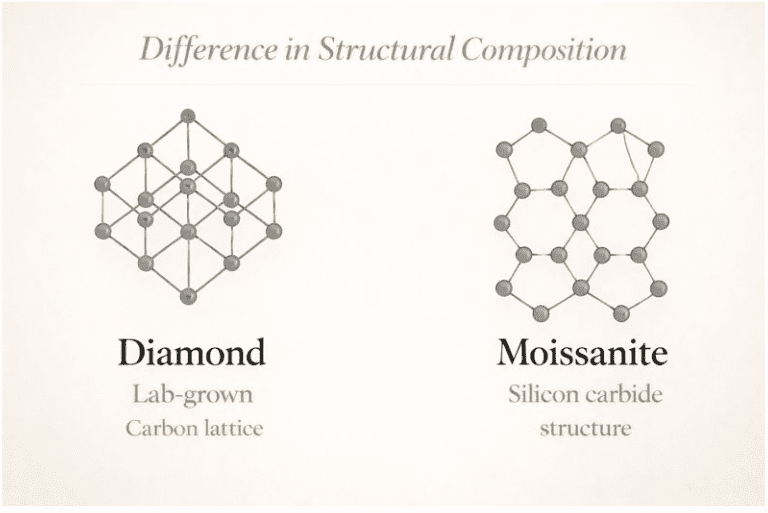
- The same chemical composition as a natural diamond (pure carbon)
- The same crystal structure
- The same hardness and durability
- The same visual performance when properly cut
The only difference is how it is formed. Instead of developing underground over millions of years, a lab-grown diamond is created in a controlled environment using advanced technology that replicates natural diamond growth.
From a jeweler’s perspective, lab-grown diamonds behave exactly like natural diamonds in design, setting, and wear.
What Is Moissanite?
Moissanite is a different gemstone altogether.
It is made of silicon carbide, not carbon, and was originally discovered in microscopic amounts in nature. Today, all moissanite used in jewelry is created in laboratories.
Moissanite is valued for its brightness and affordability—but it is not a diamond, natural or lab-grown.
How Light Performance Sets Them Apart
Light behavior is often where preferences become clear.
Diamonds (Natural Or Lab-Grown)
- Balanced brilliance and sparkle
- Clean white light return
- Subtle fire
Moissanite
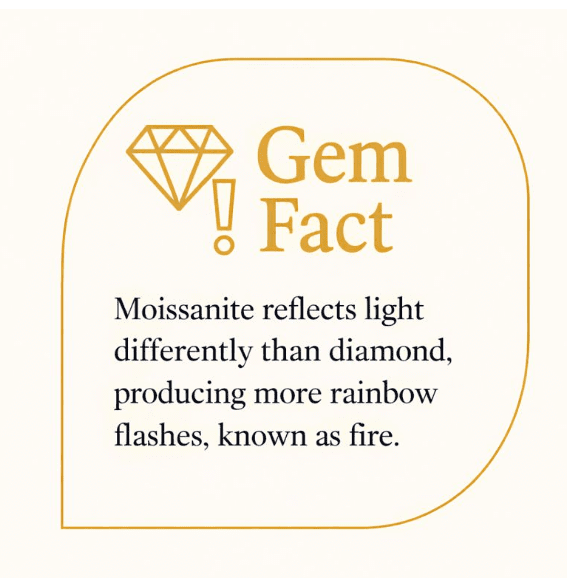
- Higher refractive index
- More rainbow flashes
- A “disco” effect in some lighting
Some people love moissanite’s bold sparkle. Others prefer the refined, classic light performance of a diamond. Neither is right or wrong—it’s about personal taste.
Durability And Daily Wear
Durability matters, especially for engagement rings.
- Diamond hardness: 10 on the Mohs scale
- Moissanite hardness: 9.25
Both are suitable for daily wear, but diamonds remain the hardest known material used in jewelry. This makes them especially resistant to scratching over decades of use.
Visual Differences Over Time
In everyday wear, subtle differences may appear.
Moissanite can:
- Show more rainbow dispersion under bright lights
- Appear slightly “softer” at facet edges
Diamonds:
- Maintain crisp facet definition
- Retain their light performance consistently
These differences are more noticeable in larger stones or side-by-side comparisons.
How Moissanite And Lab-Grown Diamonds Compare
| Feature | Lab-Grown Diamond | Moissanite |
| Material | Carbon (diamond) | Silicon carbide |
| Is It A Diamond? | Yes | No |
| Hardness | 10 | 9.25 |
| Light Performance | White brilliance | Strong rainbow fire |
| Jewelry Tradition | Classic fine jewelry | Modern alternative |
| Long-Term Value | Stronger | Primarily aesthetic |
This comparison often helps clarify which option aligns with your expectations.
Which One Is “Better”?
There is no universal answer—only the right choice for you.
A lab-grown diamond may be ideal if you value:
- Traditional diamond identity
- Timeless aesthetics
- Strong durability
- Familiar jewelry expectations
Moissanite may appeal if you prioritize:
- Maximum sparkle
- Budget flexibility
- A distinct, modern look
The Beard Fine Jewelers Perspective
At Beard Fine Jewelers, we believe clarity leads to confidence.
When clients ask whether moissanite is a lab-grown diamond, it usually opens a broader conversation about values, style, and expectations. Our role is to explain the differences clearly—without pressure—so you can choose a stone that feels right now and years from now.
Both options can be beautifully designed. The difference lies in what you want your jewelry to represent.
Conclusion: Understanding The Difference Matters
Moissanite is not a lab-grown diamond—but that doesn’t make it inferior. It simply makes it different.
When you understand how each stone performs, wears, and fits into fine jewelry traditions, the decision becomes less confusing and more personal. Whether you’re drawn to the classic identity of a diamond or the bold sparkle of moissanite, knowledge ensures your choice feels intentional.
A thoughtful conversation with a jeweler often brings everything into focus.
Beard Fine Jewelers
2002 S 1st St, Lufkin, TX 75901
Phone: (936) 637-2848
Website: www.beardfinejewelers.com
If you’d like to compare stones in person or explore custom designs, that’s where preferences usually become clear.